Botox for Migraines: What to Expect
When headaches start dictating your work schedule, sleep, travel plans, and even how much screen time you can handle, relief stops being a luxury. For many people with chronic headache patterns, botox for migraines becomes part of a real medical treatment plan – not a cosmetic extra.
That distinction matters. Migraine treatment with Botox is not the same as getting a few units for forehead lines before an event. It follows a specific protocol, targets precise muscle areas, and is generally considered for people dealing with frequent, disruptive migraine days. If you have been hearing about it and wondering whether it is worth pursuing, the better question is not whether it is trendy. It is whether you are a good candidate.
What is botox for migraines?
Botox for migraines uses onabotulinumtoxinA injections to help reduce the number of headache days in adults with chronic migraine. In practical terms, that usually means headaches on 15 or more days per month, with migraine features on at least some of those days.
The goal is prevention. This is not a rescue treatment you get during an active migraine attack. Instead, Botox is used on a schedule to reduce how often migraines happen and, for some patients, how intense they feel.
Researchers believe Botox helps by interrupting pain signaling pathways involved in migraine activity. It does not cure migraine disease, and it does not work overnight. What it can do is lower the overall burden for the right patient, which is often the difference between barely managing and functioning normally again.
Who is a good candidate for botox for migraines?
This treatment tends to be most relevant for adults with chronic migraine rather than occasional headaches or infrequent migraine episodes. If you get a few migraines a month, your provider may steer you toward other preventive or acute treatment options first.
A strong candidate is usually someone who has a documented history of frequent migraine days, has tried other treatments without enough relief, or cannot tolerate the side effects of certain oral medications. Some patients also prefer an in-office treatment every few months over remembering a daily preventive medication.
That said, it depends on your diagnosis. Tension headaches, sinus pressure, TMJ pain, cervicogenic headaches, and true migraine can overlap in ways that are easy to confuse. A proper medical evaluation matters because the best treatment plan starts with the right label.
How the treatment works
Botox for migraines follows a structured injection pattern rather than a customized aesthetic pattern. The medication is typically placed across specific areas of the forehead, temples, bridge of the nose, back of the head, neck, and upper shoulders.
These injection sites are chosen because they relate to the nerve and muscle pathways involved in chronic migraine pain. The treatment is quick, but precision matters. This is one reason patients often look for experienced medical injectors who are comfortable working beyond cosmetic concerns and understand functional treatment goals.
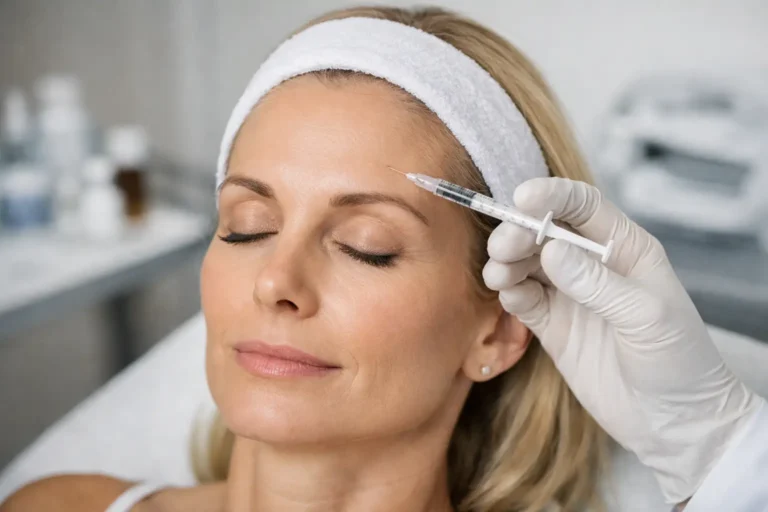
Most appointments are straightforward. The injections are done with a very fine needle, and the process is generally well tolerated. Patients often describe the sensation as brief pinches rather than significant pain. If you are already familiar with cosmetic neurotoxin treatments, the feel may be somewhat familiar, although the number of injection points is greater.
What to expect at your appointment
Your provider will review your headache history, medications, symptom pattern, and treatment goals before moving forward. If Botox is appropriate, the treatment itself usually takes only a short office visit.
You will not need major downtime afterward. Many patients return to normal activities the same day, although your provider may give a few simple aftercare instructions based on your medical history and treatment areas.
The biggest expectation to set is timing. Botox for migraines is not usually instant. Some patients notice improvement within a couple of weeks, but many see the full value after repeated treatment cycles. It is common to assess results over time rather than after a single session.
When results start and how long they last
Most patients receive Botox for migraines about every 12 weeks. That schedule is important because the treatment is designed to build consistency, not provide a one-time reset.
Some people feel meaningful relief after their first treatment, while others need two or three rounds before the benefits become clear. That can feel frustrating if you are hoping for immediate change, but it is a normal part of the process. Migraine prevention is often about trend improvement, not overnight transformation.
When Botox works well, patients may notice fewer migraine days, shorter attacks, less intensity, or reduced reliance on rescue medication. Not every patient experiences all of those benefits. The result profile varies, which is why follow-up and documentation are so useful.
Benefits beyond fewer headache days
The obvious goal is reducing migraine frequency, but that is only part of the story. A good response can improve sleep, concentration, productivity, exercise tolerance, and overall quality of life.
For busy professionals and parents, fewer migraine days can mean fewer canceled commitments and less anxiety about when the next attack will hit. That matters just as much as the numbers on a symptom tracker.
There can also be a cosmetic side benefit in some treated areas, especially in the forehead. Still, that should be viewed as secondary. Botox for migraines is a medical treatment first, and your injector’s priority should be symptom relief and safe dosing, not aesthetic shaping.
Side effects and trade-offs
Every medical treatment has trade-offs, and Botox is no exception. Common side effects can include temporary neck pain, mild soreness at injection sites, bruising, headache after treatment, or a sense of tightness in the treated areas.
Some patients also notice temporary eyebrow heaviness or mild eyelid drooping, depending on anatomy and injection placement. These effects are not the norm, but they are part of the real conversation and should be discussed upfront.
Another practical trade-off is maintenance. If Botox helps, you will likely need repeat treatment on schedule to keep the benefit going. For some patients, that is convenient. For others, the ongoing appointments and cost require planning.
This is also not the best fit for every headache patient. If your symptoms are not truly chronic migraine, if your pain pattern has changed suddenly, or if there are neurologic red flags, a broader medical workup may come first.
Botox vs cosmetic Botox
Patients are often surprised by how different these two uses can be. Cosmetic Botox is typically designed around facial movement, wrinkle softening, and aesthetic balance. Migraine Botox uses a medically established injection map and a higher total dose across more areas.
The overlap is the product itself, but the treatment objective is different. One is about appearance. The other is about prevention of a disabling neurologic condition.
That is why experience matters. If a practice offers Botox broadly, it should be able to explain the difference clearly and evaluate whether your concern is cosmetic, functional, or both.
Questions worth asking before treatment
Before starting botox for migraines, ask who performs the injections, how often they treat migraine patients, what protocol they use, what side effects they watch for, and how they track results over time. You should also ask what happens if the first round helps only a little.
A confident provider will not overpromise. The right conversation sounds clear, medically grounded, and realistic. You want to understand the likely timeline, the maintenance schedule, and whether your headache history points to true chronic migraine.
If you are already receiving aesthetic injectables, mention that too. Coordinating treatment matters so dosing and placement stay intentional.
Is it worth it?
For the right patient, Botox can be absolutely worth it. Not because it is glamorous, but because fewer migraine days can change how you work, travel, socialize, and feel in your own body.
It is not a universal answer, and it is not the first step for everyone. But if migraine has become a constant interruption, it makes sense to look at clinically established options that do more than mask symptoms. At a medically guided practice such as LightTouch Med Spa, the value is not just the product. It is getting honest evaluation, experienced injection technique, and a treatment plan built around real relief.
If migraines are taking up too much space in your month, the next smart move is simple: get evaluated and find out whether this treatment actually matches your pattern, not just your frustration.
Read More LightTouch Med Spa Articles