Botox Units Forehead: What Your Treatment Needs
A forehead that moves naturally but looks more rested is often the goal. That is why botox units forehead treatment should never be treated like a fixed menu item. The right amount depends on how strongly your forehead muscles contract, where your brows sit, the depth of your lines, and whether you are treating the frown lines between the brows at the same visit.
For some patients, a conservative approach preserves expressive movement and softens early lines. For others, stronger muscles or deeper, established wrinkles may call for a more comprehensive plan. The number matters, but injector skill, facial assessment, and precise placement matter just as much.
How Many Botox Units for Forehead Lines?
There is no single correct number of Botox Cosmetic units for every forehead. In many cosmetic treatment plans, the frontalis muscle, which raises the brows and creates horizontal forehead lines, may receive approximately 8 to 20 units. However, this is a general clinical range, not a prescription or a recommendation for every person.
Forehead treatment is frequently paired with treatment of the glabellar area, also known as the “11 lines” between the eyebrows. When both areas are treated, the total number of units used during the appointment can be higher. Botox Cosmetic’s FDA-approved dosing for forehead lines is administered in conjunction with glabellar-line treatment, so a full upper-face plan may look different from treating a single concern in isolation.
A skilled injector does not start with a number and work backward. They start by watching your facial movement at rest and in expression. Do your brows lift evenly? Does one side of the forehead work harder? Are your horizontal lines visible only when you raise your eyebrows, or are they already etched into the skin? Those details influence a safe, attractive treatment plan.
Why Botox Units Forehead Treatment Is Not One-Size-Fits-All
The forehead is one of the most nuanced injection areas because the frontalis muscle is responsible for lifting the brows. Relax it too aggressively, especially without balancing the muscles that pull the brows downward, and the result can feel heavier than intended. This is why treating forehead lines is not simply about erasing movement.
Your natural brow position is a major factor. A person with naturally low brows, hooded eyelids, or a tendency to use their forehead to open their eyes may need a more conservative approach. In contrast, someone with a high brow position and very active forehead movement may be a candidate for more units or a broader treatment pattern.
Muscle strength also varies widely. Some patients metabolize neurotoxin treatments more quickly, while others maintain results longer. Men may sometimes have stronger facial muscles and require a different dosing strategy, but gender alone should never determine treatment. Your anatomy and response to previous treatments provide more useful information than a standard label.
The Forehead and Frown Lines Work Together
Patients often request forehead Botox because they notice horizontal wrinkles in photos or makeup settling into fine lines. Yet the muscles between the eyebrows can affect the final result just as much. The glabellar muscles pull the brows inward and downward, while the frontalis lifts them upward.
When these opposing muscle groups are evaluated together, an experienced injector can create a more balanced result. This may mean treating the frown lines along with the forehead, adjusting the number of units in each area, or keeping certain portions of the frontalis more active to preserve brow support.
This balance is especially valuable for patients seeking a refreshed appearance rather than a frozen look. The goal is controlled movement, smoother skin, and brows that still look like yours.
More units do not automatically mean better results
Choosing the highest possible dose is not a shortcut to smoother results. More units can increase the intensity or duration of muscle relaxation, but it can also create an outcome that feels too restrictive for someone who values expression. The best plan is the one that matches your facial anatomy and aesthetic preferences.
For first-time patients, a thoughtful, conservative dose may be appropriate, with a follow-up assessment once the treatment has settled. Experienced Botox patients may already know they prefer more movement, less movement, a subtle brow lift effect, or a longer-lasting result. Those preferences should be part of the conversation.
What Happens During a Forehead Botox Appointment?
A quality appointment begins with an assessment, not an injection. Your provider should ask what you would like to change, review your medical history, and evaluate your brows, eyelids, forehead lines, and facial movement. Photos may be helpful for documenting your baseline and guiding future treatment adjustments.
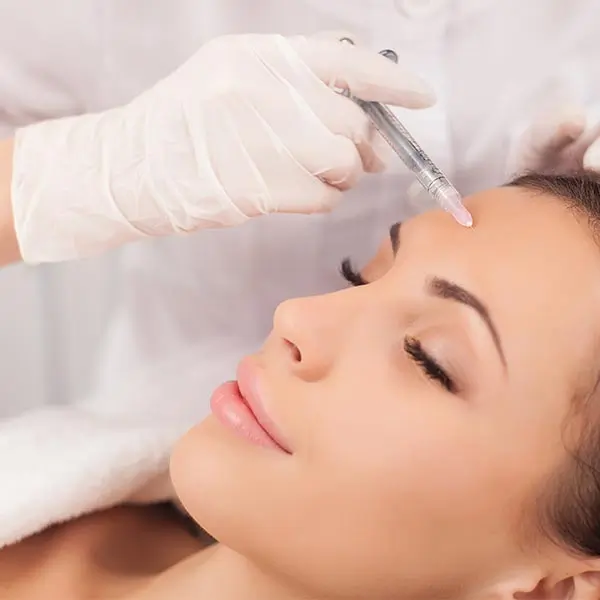
The injections themselves are quick. Botox Cosmetic is placed with a very fine needle at carefully selected points across the forehead and, when appropriate, between the brows. Most patients describe the sensation as brief pinches. Minor redness or small raised areas at the injection sites can occur immediately afterward and typically fade quickly.
You can generally return to normal daily activities right away, although your provider may advise you to avoid strenuous exercise, rubbing or massaging the treated area, and lying flat for a short period after treatment. Follow the specific aftercare instructions provided at your visit.
Results do not appear instantly. Many patients begin to see a change within several days, with the full effect commonly developing around two weeks. Results often last about three to four months, though the timeline can vary based on dose, metabolism, muscle activity, and treatment history.
How to Ask for Natural-Looking Forehead Botox
The most helpful request is not necessarily “How many units do I need?” It is describing the result you want. You might say you want to soften horizontal lines while keeping some movement, look less tired in photographs, reduce the habit of raising your eyebrows, or smooth the frown lines without changing your brow shape.
Be candid about prior injectable treatments, including which product was used, how many units you received if you know, how long your results lasted, and anything you did not like. A previous experience of feeling too frozen, uneven, or heavy gives your injector valuable information for planning a better outcome.
It also helps to understand that Botox Cosmetic units are product-specific. Units from Botox Cosmetic are not interchangeable with units from Dysport, Xeomin, Jeuveau, or other neuromodulators. Comparing unit counts between brands without context can be misleading because each product has its own formulation and dosing approach.
Safety Matters More Than a Unit Count
Botox Cosmetic is widely used and has a strong safety profile when administered by a qualified, properly trained medical professional. Still, it is a prescription treatment, and every patient should be evaluated individually. Tell your provider about medications, allergies, neuromuscular conditions, pregnancy or breastfeeding status, and any past reaction to injectable treatments.
Potential side effects can include temporary redness, swelling, tenderness, bruising, headache, asymmetry, or an unwanted change in brow or eyelid position. While these outcomes are uncommon with careful technique, they are part of the reason injector experience is so important. The forehead is not an area to choose based on the lowest advertised price alone.
At LightTouch Med Spa, treatment planning is centered on your facial anatomy, goals, and comfort. A consultation with an experienced injector can help determine whether Botox Cosmetic, another neuromodulator, or a combination approach is the right choice for your upper-face concerns.
If your forehead lines are starting to distract from how energized and confident you feel, the next step is simple: choose a provider who will assess your expression before counting units. The right treatment should leave you looking rested, polished, and unmistakably like yourself.
Read More LightTouch Med Spa Articles