Orlando Botox for TMJ Pain: Does It Help?
Jaw pain has a way of taking over your day. You feel it when you wake up, when you chew, when you talk, and sometimes even as a steady pressure behind the temples. For many people dealing with clenching, grinding, or chronic tension in the jaw, Botox for tmj pain becomes part of the conversation when night guards, stress reduction, and home care have not done enough.
This is not a one-size-fits-all fix, and it is not the first step for everyone. But for the right patient, it can reduce the muscle tension driving pain and give the jaw a break.
How Orlando Botox for TMJ pain works
TMJ pain is often used as shorthand for a few different issues. Some people have a true temporomandibular joint disorder involving the joint itself. Others have overactive jaw muscles, clenching habits, teeth grinding, or tension that radiates into the face, temples, and neck. Those differences matter because Botox works on muscle activity, not on every possible cause of jaw pain.
When Botox is placed into overworked chewing muscles, most commonly the masseter and sometimes the temporalis, it temporarily reduces how forcefully those muscles contract. That does not paralyze the jaw or stop normal function. The goal is to soften excessive tension so the muscles are not constantly overfiring.
For patients whose discomfort is tied to clenching or grinding, that reduction in force can mean fewer tension headaches, less jaw soreness, and less pressure around the joint. Some people also notice a cosmetic bonus – a slimmer lower face if enlarged masseter muscles have created a wider jawline. That said, the functional goal should come first when TMJ symptoms are the reason for treatment.
Who is a good candidate for Botox for TMJ pain?
The best candidates usually have muscle-driven symptoms. That can include jaw tightness, facial soreness, morning tension from nighttime grinding, frequent clenching during the day, temple pain, or headaches linked to overactive jaw muscles. Patients who have tried conservative measures and still feel uncomfortable often ask whether injectables are the next step.
A consultation is where this gets sorted out. If pain is primarily coming from inflammation inside the joint, a bite issue, arthritis, trauma, or a more complex dental condition, Botox may help only partially or not enough to justify treatment on its own. In those cases, a coordinated plan with a dentist, oral surgeon, or other medical provider may be the better route.
This is also why experienced injectors matter. The anatomy of the jaw is straightforward to the trained eye, but proper assessment is what separates a targeted medical treatment from a generic injection appointment.
What treatment feels like
One reason this option appeals to busy professionals and aesthetics-savvy patients is that it is quick. The injections themselves usually take only a few minutes once the treatment plan is mapped out. A topical numbing step may be used depending on the provider and patient preference, but many people find the treatment very tolerable.
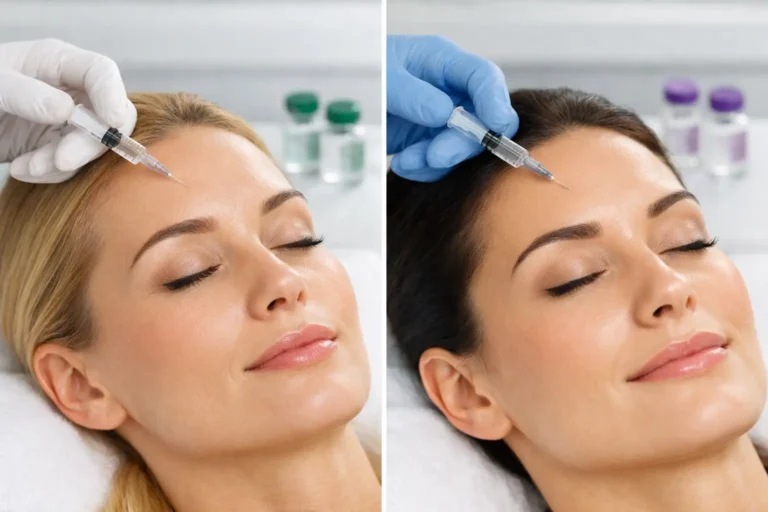
You will typically be asked to clench so the injector can identify the most active part of the masseter. Small amounts of product are then placed into specific points. In some cases, the temporalis muscle at the temples is also treated if that area is contributing to pain or headaches.
Afterward, most patients return to normal activities the same day. There may be mild tenderness, slight swelling, or minor bruising at the injection sites, but downtime is minimal. That convenience is a major reason this treatment has become so popular for both cosmetic and functional concerns.
When results start and how long they last
Botox does not work instantly. Most patients start to notice a change within several days, with fuller results developing over one to two weeks. If the issue is muscle tension, the jaw often begins to feel less heavy and less reactive as the treated muscles relax.
How long results last depends on metabolism, muscle strength, dose, and how severe the clenching pattern is. Many patients find that relief lasts about three to four months, though some notice a shorter or longer window. Strong masseter muscles may require more product than areas like the forehead because they are larger, more powerful muscles.
With repeat treatment, some patients report that their baseline clenching becomes easier to manage. Others still need regular maintenance to keep symptoms controlled. It depends on the cause of the problem and how much habit, stress, and sleep-related grinding are involved.
Benefits patients care about most
The headline benefit is pain relief, but that often shows up in everyday ways. Chewing may feel easier. Morning jaw fatigue can improve. Tension headaches may happen less often. Some patients stop feeling like they are constantly holding stress in the lower face.
There can also be protective benefits. If clenching is severe, reducing muscle force may help decrease wear on dental work or reduce pressure that contributes to soreness. It is not a substitute for dental treatment when teeth grinding is causing damage, but it can be part of a smarter overall plan.
Then there is the facial slimming effect. When enlarged masseter muscles shrink over time from reduced activity, the lower face can appear softer and more tapered. For some patients, that is a welcome added result. For others, especially those who already have a narrow face, it may be something to approach more cautiously. Good treatment planning takes both comfort and facial balance into account.
Risks, trade-offs, and what to ask about
Botox for TMJ pain is generally well tolerated when performed by a qualified medical injector, but that does not mean risk-free. The most common issues are temporary soreness, bruising, and occasional asymmetry if one side responds differently than the other. In some cases, patients notice changes in chewing strength, which is expected to a degree because the goal is to reduce overactivity.
The important trade-off is this: enough product is needed to calm the muscle, but too much in the wrong pattern can create an overdone look or make chewing feel weaker than desired. Precision matters. So does a conservative approach when someone is new to treatment.
Another point patients should understand is that this is often considered an off-label use. That does not make it unusual or inappropriate. It simply means the product is being used based on clinical judgment rather than a specific FDA approval for TMJ disorder. A credible provider will be direct about that and about whether you are likely to benefit.
Cost and why pricing varies
One of the most common questions is cost, and the answer depends on how many units are needed. Treating the jaw usually requires more product than small cosmetic areas because the muscles are larger and stronger. A patient with heavy clenching and prominent masseters may need a significantly different dose than someone with mild tension.
Provider experience also affects pricing. In a medical aesthetics setting, you are not just paying for the product itself. You are paying for assessment, injector training, dosing strategy, facial anatomy knowledge, and a treatment plan built around both function and appearance.
That makes bargain shopping a poor strategy for jaw treatment. A lower price is not a better value if the dose is ineffective or the injection pattern creates unwanted facial changes.
Botox versus other TMJ treatments
Botox is best viewed as one tool, not the entire toolbox. For some patients, a night guard, physical therapy, stress management, anti-inflammatory care, or dental correction may be enough. For others, combining those options with injectables produces the best result.
If symptoms are clearly driven by overactive muscles, Botox can be an efficient option with little downtime. If there is joint locking, severe clicking, bite changes, or significant structural problems, it may need to play a supporting role rather than the lead one. That is where a medically guided evaluation becomes especially valuable.
Patients who already trust aesthetic injectables often feel more comfortable trying this treatment because the process is familiar. Even so, the goal here is not just a smoother look or facial contouring. It is to improve comfort in a part of the body you use constantly.
Choosing the right provider
Jaw treatment is not the place for guesswork. You want an experienced medical injector who understands facial anatomy, functional dosing, and the difference between cosmetic masseter slimming and treatment for muscle-related pain. Those are related skills, but they are not exactly the same.
At our practice LightTouch Med Spa, where injectable treatments are performed at high volume and guided by experienced medical professionals, patients can feel more confident that both comfort and facial harmony are being considered. That matters when the goal is to help you feel better without compromising a natural result.
The right consultation should feel clear, not rushed. You should leave knowing whether Botox is likely to help, what muscles are being treated, how soon you may notice relief, and what realistic maintenance looks like.
If your jaw pain keeps showing up in the background of daily life, Botox may be worth a serious look – not as a trend, but as a targeted treatment for the right kind of tension.

Read More LightTouch Med Spa Articles