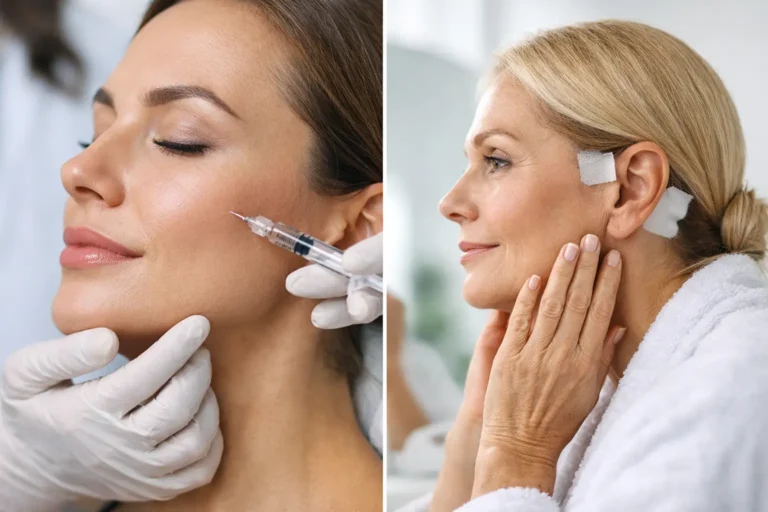
How to Prevent Filler Migration and Protect Results
A beautifully refreshed result should look intentional – not puffy, overfilled, or out of balance. Understanding how to prevent filler migration begins long before your appointment. The product, the injection technique, the amount placed, your facial anatomy, and your long-term treatment plan all influence how your results settle and age.
Dermal filler can be an exceptional way to restore facial volume, soften lines, define the lips, or enhance contour without surgery. But filler is not a one-size-fits-all treatment. A conservative, medically guided approach is the best way to protect natural-looking results and reduce the chance of product appearing where it was not intended.
What Is Filler Migration?
Filler migration refers to hyaluronic acid filler moving or appearing to move beyond the area where it was originally placed. It is most commonly discussed around the lips, where product can create fullness above the lip border, sometimes called a filler mustache. It may also be a concern in delicate areas such as the under-eyes.
Not every change after filler is migration. Early swelling, bruising, water retention, and normal tissue settling can temporarily make an area look uneven or fuller than expected. Some patients also have filler placed at different appointments or by different providers, making it difficult to tell where volume originated. A qualified injector can assess whether you are seeing normal healing, accumulated product, or true migration.
Migration is not always caused by one mistake. It can be influenced by product choice, injection depth, amount of filler, frequent retreatment, tissue quality, and the natural movement of the face. That is why personalized treatment planning matters as much as the injection itself.
How to Prevent Filler Migration Before Treatment
The most effective prevention starts with choosing an experienced medical injector who understands facial anatomy and has a conservative aesthetic eye. Your provider should evaluate your facial proportions, skin quality, previous filler history, and the way your face moves when you speak and smile. The goal is not simply to add volume. It is to place the right amount of the right product in the right tissue plane.
Choose an experienced, qualified injector
Filler is a medical treatment, not a retail purchase. Look for a licensed, experienced injector working in a reputable medical aesthetic setting and using FDA-approved, recognized filler brands. A skilled provider understands that lip filler, cheek filler, chin filler, and under-eye filler require very different products and techniques.
An injector should also be comfortable telling you when filler is not the best answer. For example, an overfilled lip may benefit from dissolving and a reset rather than adding more product. In other cases, Botox or Dysport, skin resurfacing, or collagen-stimulating treatments may better support your goal without placing additional volume in an already full area.
Start conservatively and build gradually
More filler does not automatically create a better result. In fact, adding too much product at one visit or repeatedly treating an area before prior filler has fully settled can increase the risk of an unnatural appearance.
For lips and other high-movement areas, a gradual approach is often the most flattering. Your injector may recommend starting with a modest amount, allowing swelling to resolve, and reassessing after the appropriate interval. This gives both you and your provider a clearer picture of what your face truly needs.
If you have had filler elsewhere in the past, be honest about it. Bring treatment records if possible, especially if you are unsure what product was used or where it was injected. A complete history helps prevent unnecessary layering of filler.
Use the right filler for the area
Hyaluronic acid fillers are not interchangeable. Some are designed for flexible movement and soft integration in the lips. Others provide more structure for the cheeks, jawline, or chin. Product selection affects how naturally the filler behaves in tissue.
The treatment area also matters. A filler that performs beautifully in the cheeks may be too firm or too volumizing for the lips. Your provider should select a product based on the level of support, softness, and movement needed, not simply on what is available or familiar.
Technique and Placement Make a Meaningful Difference
Filler needs to be placed at the correct depth and in the appropriate amount for each part of the face. Injection technique is one of the major factors within your provider’s control. Experienced injectors use their understanding of anatomy to place product precisely and avoid overloading delicate tissue.
The lips are a good example. They move constantly, have limited space, and are surrounded by tissue that can show even small amounts of excess volume. Repeatedly placing filler too close to the border or adding volume before previous product has been evaluated can contribute to a blurred lip shape. A well-planned treatment respects the natural anatomy of the lip rather than trying to force a trend-driven shape.
Facial balancing can also reduce the temptation to overfill one feature. Sometimes a chin, jawline, or cheek treatment creates better harmony than continuing to add product to the lips. The best filler plans look at your full face, not one isolated area.
Aftercare: What Helps and What Does Not
Aftercare cannot change where filler was injected, but it can support a smoother healing period. Follow the specific instructions from your injector, since guidance may vary by treatment area and your medical history.
For the first day or two, most patients are advised to avoid strenuous workouts, high heat exposure, and excessive alcohol, which may worsen swelling or bruising. Avoid pressing, massaging, or manipulating the treated area unless your injector specifically instructs you to do so. At-home massage is not a universal filler aftercare step and can be counterproductive when done without professional guidance.
It is also wise to schedule filler with enough time before a wedding, vacation, photo shoot, or major event. Swelling can be unpredictable, particularly with lip filler. Planning ahead gives the area time to heal and gives you room for a follow-up assessment if needed.
Sleeping on your back with your head slightly elevated may feel more comfortable during the first night after treatment. Use a cool compress gently if recommended, but do not apply significant pressure to the injection sites.
Avoid the Cycle of Constant Touch-Ups
One of the most common reasons results begin to look overdone is not necessarily migration. It is treating based on a momentary impression rather than a thoughtful plan. A small amount of swelling, a social media comparison, or a desire for a more dramatic look can lead to filler being added too soon.
Give your results time to settle before judging them. Your injector can tell you when a follow-up makes sense, but many areas need at least several weeks for swelling to resolve and for the product to integrate. Keep consistent photos in similar lighting if you want to track changes objectively.
For repeat filler patients, periodic reassessment is valuable. Filler longevity varies based on the product, treatment area, metabolism, and amount placed. Instead of automatically scheduling the same number of syringes at every visit, let your current anatomy guide the next step. Sometimes the best plan is maintenance. Sometimes it is waiting. And sometimes it is dissolving older hyaluronic acid filler before creating a cleaner, more refined result.
When to Contact Your Injector
Mild swelling, tenderness, and bruising are common after dermal filler and generally improve over several days. However, contact your provider promptly if you notice worsening pain, skin color changes such as blanching or a dusky appearance, unusual warmth, significant swelling that is getting worse, or any concern about your healing.
If you suspect migration weeks or months after treatment, schedule an assessment rather than trying to correct it yourself. Hyaluronic acid fillers can often be adjusted or dissolved with hyaluronidase when medically appropriate. The right solution depends on the product used, location, amount of filler present, and your desired outcome.
At LightTouch Med Spa, treatment planning is built around premium products, experienced injectors, and results that complement your features rather than compete with them. A consultation is the right place to discuss previous filler, aesthetic goals, and whether a conservative enhancement or a treatment reset will serve you best.
The most confident filler results are rarely the most obvious. Choose expertise, give your face time, and treat every appointment as part of a long-term plan for balanced, natural-looking beauty.
Read More LightTouch Med Spa Articles