How to Treat a Gummy Smile Without Surgery
A smile can be healthy, bright, and still feel out of balance when too much gum tissue shows above the upper teeth. If you have been searching for how to treat gummy smile, the most effective answer starts with identifying why it happens. For many patients, a quick injectable treatment can soften the look of a high smile line without surgery or downtime. For others, the right answer may involve dental or periodontal care.
A gummy smile, also called excessive gingival display, is usually considered noticeable when more than 2 to 3 millimeters of upper gum tissue is visible during a natural smile. It is not a medical problem in most cases. It is a cosmetic concern, and the goal is never to erase your expression. The goal is to create a smile that feels more proportionate while still looking like you.
What Causes a Gummy Smile?
Your gums may show for more than one reason, which is why a personalized assessment matters. One of the most common causes is an overactive upper lip. When you smile, the muscles that lift the upper lip contract strongly, exposing more of the gums than you would prefer.
Other causes can include naturally short-looking teeth, excess gum tissue, the way the upper jaw developed, or the position of the teeth. Some people have a combination of factors. An experienced provider should look at your smile at rest and in motion, as well as your lip movement and overall facial proportions, before recommending any treatment.
This step protects you from choosing a treatment that is too aggressive, too temporary, or simply not designed for the source of your concern.
How to Treat a Gummy Smile With Botox
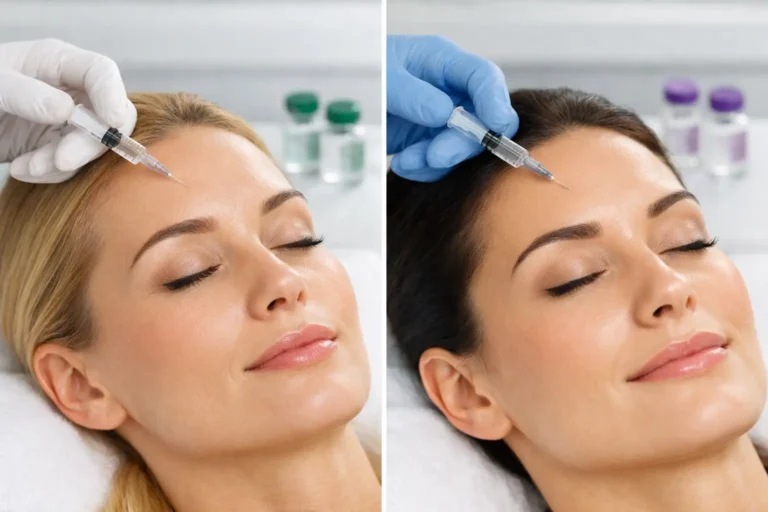
For patients whose gummy smile is caused primarily by upper-lip movement, Botox is often the most convenient non-surgical option. Small, precise injections can relax the muscles that pull the upper lip too high when you smile. With less lift, less gum tissue is visible.
The treatment itself is quick. Your injector uses a fine needle to place a small amount of neuromodulator near the muscles responsible for lifting the upper lip. There is typically no required downtime, although mild redness, swelling, or a small bruise can occur at an injection site.
Results do not usually appear instantly. Most patients begin to notice a softer smile line within several days, with full results commonly developing around two weeks. The effect is temporary, often lasting about three to four months, though individual metabolism, muscle strength, and dosage all affect longevity.
The best gummy smile Botox results are subtle. Your upper lip should still move and your smile should still feel expressive. The difference is that the gums no longer take center stage.
Why injector experience matters
Gummy smile treatment requires restraint and accurate placement. Too much product, or product placed incorrectly, can make the upper lip feel heavy or change the way certain words and expressions look. This is why choosing a qualified medical injector with a detailed understanding of facial anatomy is essential.
At LightTouch Med Spa, treatment planning is designed around natural-looking facial balance, not a one-size-fits-all injection pattern. A consultation gives your provider the opportunity to evaluate whether Botox is appropriate and discuss the amount of correction that looks realistic for your features.
Other Treatment Options for Excess Gum Display
Botox can be an excellent option, but it is not the right solution for every gummy smile. If the underlying issue involves the gums, teeth, or jaw structure, a dental specialist may recommend a different approach.
Gum contouring or crown lengthening
When excess gum tissue covers too much of the teeth, a dentist or periodontist may reshape the gumline. This can make teeth appear longer and improve the proportion between teeth and gums. Depending on the case, crown lengthening may also involve adjusting underlying bone. It is a more permanent approach than injectables, but it requires dental evaluation, healing time, and a greater commitment.
Orthodontic treatment
If tooth position contributes to a gummy smile, braces or clear aligners may help improve the relationship between teeth, lips, and gums. Orthodontic treatment takes longer than Botox, but it addresses structural alignment rather than simply managing lip movement.
Jaw surgery
In cases where the upper jaw extends downward more than usual, orthognathic surgery may be discussed by an oral and maxillofacial surgeon. This is a major procedure with significant recovery time. It is generally reserved for more pronounced skeletal concerns, especially when bite function is also affected.
Lip repositioning surgery
Some patients consider lip repositioning, a surgical procedure that limits how far the upper lip can rise during smiling. While it may offer longer-lasting change than Botox, it also carries surgical risks and may not be suitable for everyone. A thorough discussion with a qualified dental or surgical professional is necessary.
Botox vs. Surgical Gummy Smile Treatment
The right choice comes down to cause, desired longevity, budget, and comfort level. Botox is ideal for many patients who want a conservative, low-downtime way to reduce gum show caused by a hyperactive upper lip. It is also a practical way to preview a softer smile before considering a permanent procedure.
The trade-off is maintenance. Because Botox gradually wears off, repeat appointments are needed to maintain the result. Surgical and dental treatments can provide a more lasting correction when excess gum tissue, tooth shape, or jaw position is the primary issue. However, those options generally involve more recovery, higher costs, and greater clinical commitment.
For some patients, the strongest outcome comes from combining care. For example, a person may improve tooth proportions through cosmetic dentistry and use a small amount of Botox to control upper-lip elevation. Your aesthetic and dental providers can help determine whether a combination approach makes sense.
What to Expect at a Gummy Smile Consultation
A good consultation should feel clear, not pressured. Your provider will ask what you notice in photos, how your smile looks when you laugh, and whether your concern has changed over time. They may assess your facial movement, upper-lip length, teeth, gums, and symmetry.
Be honest about the result you want. Some patients want only a slight reduction in gum visibility. Others want a more noticeable change for weddings, professional headshots, or everyday confidence. Bringing a photo of your natural smile can help guide the conversation, but your provider should never promise an identical result to someone else.
If Botox is appropriate, you should also discuss your medical history, current medications, prior cosmetic treatments, pregnancy or breastfeeding status, and any history of neuromuscular conditions. A responsible provider will explain expected results, potential side effects, and when you should return for follow-up.
How to Make Your Results Look Natural
The most flattering gummy smile treatment is usually conservative. Facial expressions are personal, and an overly lowered upper lip can look less natural than a high smile line. Starting with an appropriate dose and reassessing after the treatment has settled gives you more control over the outcome.
Follow your injector’s aftercare instructions carefully. Avoid rubbing or massaging the treated area unless specifically advised. Ask when it is safe to resume exercise, and contact your provider if you have concerns about asymmetry, prolonged swelling, or changes that do not feel right.
A gummy smile does not need to keep you from smiling freely in photos, meetings, or special moments. The best next step is a thoughtful consultation that looks beyond the gums themselves and considers how your lips, teeth, and facial movement work together. With the right plan, a more balanced smile can still be completely, confidently yours.
Read More LightTouch Med Spa Articles