What Happens When Lip Filler Wears Off? Do Lips Stretch?
“If I stop, will my lips look worse than before?” We hear some version of that in almost every lip consult. Here’s what happens when lip filler wears off: your body slowly breaks down the hyaluronic acid, and your lips gradually return to about where they started. For most people who’ve had moderate, well-placed amounts, the lips don’t end up stretched, saggy, or smaller than their natural baseline.
There are a few exceptions and some details worth knowing, especially if you’ve had a lot of filler over the years. Here’s how our injectors explain it.
What Happens When Lip Filler Wears Off, Step by Step
The lip fillers we use are made of hyaluronic acid (HA), a sugar molecule your body already makes. Once it’s injected, your body starts breaking it down little by little. It doesn’t disappear all at once, so there’s no “deflate” moment.
For many people, here’s the general pattern:
- The first few weeks. Swelling fades and the filler settles into its true shape. This is your real result.
- Several months in. Lips still look full, but you may notice the shape softening, often first at the edges or the border.
- Somewhere around six months to a year. Most people feel their lips are closer to baseline. Some products and some bodies hold longer.
Lips move constantly when you talk, eat, and smile, so filler tends to break down faster there than in areas like the cheeks or chin. Metabolism, the product used, and how much was placed all play a role.
Do Lips Stretch From Filler?
This is the question behind most of the worry. With moderate amounts placed gradually, we don’t typically see lips that look stretched or deflated after filler fades. Lip tissue is pretty forgiving, and the filler integrates into it rather than ballooning it out like a water balloon.

Where stretching becomes more of a concern is with very large volumes, added quickly, over and over, without letting the tissue settle. Think of lips that have been pushed far past their natural proportions for years. In those cases the tissue can lose some of its tone, and the lips may not snap back quite the same way.
This is a big part of why we build lips slowly. Our earlier post on 0.5 mL vs. a full syringe of lip filler explains why a smaller first dose often makes more sense. You can always add. Starting small is better for your lips and your wallet.
Why Your Lips Might Look “Smaller” Than Before
Some patients swear their lips look thinner after the filler fades. It’s one of the most common surprises about what happens when lip filler wears off, and in most cases it’s a perception thing. You’ve spent months looking at a fuller version of yourself, so your natural lips feel smaller by comparison, even though they’re back to where they started.
There’s also the effect of time. Lips naturally lose some volume with age, so if you started filler in your late 20s and stopped in your mid-30s, some of the change you see may just be normal aging. Filler didn’t cause that, and stopping didn’t speed it up.
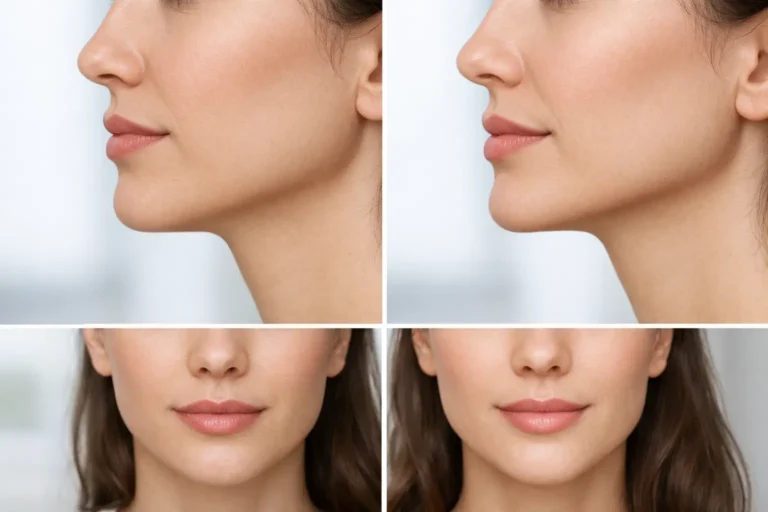
A tip we give in consults: take clear before photos in good light. They’re the best way to judge where you really started. Browsing our before and after gallery can also help you see what a natural amount of filler looks like next to a starting point.
When Filler Lingers Longer Than You Think
Here’s the part that surprises people. Even when your lips look like they’re back to baseline, small amounts of HA can sometimes stay in the tissue longer than expected. This is one reason we don’t just keep adding syringe after syringe on a strict calendar.
Leftover filler can also travel a bit, especially when large amounts are placed or the lips are overfilled. That’s where you see a “duck lip” shelf or filler sitting above the lip border. Our guide on how to prevent filler migration covers why it happens and how careful placement helps.
If filler has migrated or built up, the good news is that HA can be dissolved with hyaluronidase. We keep it on hand, and our earlier post on whether filler can be dissolved explains what that process involves. Sometimes dissolving and starting fresh is the cleanest way to get back to a natural shape.
Keeping, Topping Up, or Stopping
When your filler starts to fade, you have three options, and all of them are fine:
Top up
Many patients come back when they notice softening and get a smaller amount to maintain their shape. Often a half syringe is enough. Our lip filler treatments in Orlando are planned around this “maintain, don’t max out” approach.
Take a break
Letting filler fully fade is a perfectly reasonable choice. Some people like to reset before deciding on a new shape or product. Nothing bad happens to your lips during a break.
Stop altogether
If you decide filler isn’t for you anymore, your lips will return to their natural look over time. If you’d rather not wait, dissolving is an option for HA filler. If you’re curious how different products hold up over time, our comparison of Juvéderm vs. Restylane for lips is a good read.
Quick answers
How long does lip filler last?
For many people, about six months to a year, though it varies with the product, the amount, and your metabolism. Lips tend to break filler down faster than other areas.
Will my lips be bigger after filler wears off?
Usually not. Most people return to roughly their natural size. Very rarely, a small amount of lingering filler or scar tissue can leave a slight difference.
Do lips get bigger permanently with repeated filler?
With moderate amounts, not in a way most people notice. Large volumes repeated over years are where stretching or lingering filler is more likely.
Is it bad to let lip filler wear off completely?
Not at all. It’s safe to let it fade and safe to start again later. Your injector may even prefer to see your true baseline before planning the next round.
If you’re wondering whether to top up, take a break, or start over, we’re happy to take a look. Our nurse practitioners keep things balanced, so your lips look like yours, just a little fuller. You can book a free consultation online or call 407-440-2025. And if you’re planning around a beach trip or wedding season, give yourself a couple of weeks for swelling to settle.
This article is for general education and isn’t a substitute for an in-person medical evaluation. Every face is different, so the best plan comes from a consultation.

Read More LightTouch Med Spa Articles