Botox for 11 Lines: Units, Results, and What to Expect
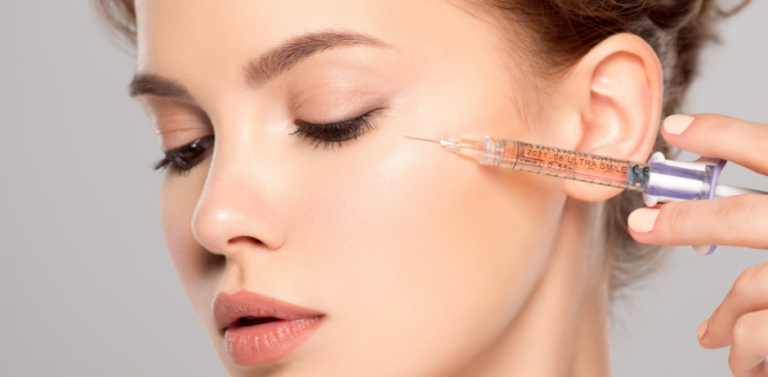
Botox for 11 lines is one of the most common treatments we do, and for good reason. The vertical frown lines between your brows respond well to a neurotoxin, usually with around 20 units of Botox spread across five small injection points. You’ll start to see softening in three to five days, with the full result at about two weeks.
A lot of people tell us those two lines make them look angry or tired, even when they feel fine. Squinting through Florida glare all year doesn’t help. Here’s what to expect, how many units it typically takes, and what Botox can and can’t do for deeper lines.
Why Botox for 11 lines works so well
The 11s are caused by a small group of muscles between and above your brows, mainly the corrugators and the procerus. Every time you frown, concentrate, or squint, they pull your brows together and down. Over years, that repeated folding leaves creases.
Botox relaxes those muscles so they can’t contract as strongly. Less pulling means less creasing. That’s why it’s so effective here: the lines are almost entirely caused by movement, and Botox targets movement directly.
There’s a side benefit people don’t expect. When the frown muscles relax, the brows can sit a touch more open, which reads as rested rather than stern.
How many units of Botox for 11 lines?
The FDA-approved dose of Botox Cosmetic for frown lines is 20 units, split across five injection sites. That’s our usual starting point, but it’s not a fixed rule.
- Lighter frowners or first-timers: some people do well with a little less, especially if the lines are faint.
- Strong frowners: if your brows really crunch together, you may need more for a result that lasts.
- Men: men usually have larger, stronger frown muscles and often need a higher dose. Our post on Botox for men goes into why.
Dosing isn’t the place to bargain hunt. Too few units can mean a result that fades in six weeks or never fully softens the line. If you’re curious how this compares to other areas, our guide to Botox units for the forehead walks through typical ranges.
What about Dysport or Xeomin?
Both are approved for frown lines too. Xeomin is dosed similarly to Botox. Dysport uses a different unit scale, so the number looks higher, often around 50 units for the 11s, but that doesn’t mean you’re getting more product. Some patients prefer how Dysport spreads in this area. We compare them in Botox vs. Dysport, and you can read more on our Dysport treatment page.
What to expect at your appointment and after
The treatment itself takes a few minutes. We’ll ask you to frown so we can see exactly how your muscles move, mark the points, and inject with a very fine needle. Most people describe it as a few quick pinches.
Afterward, you might see small bumps that settle within half an hour, and occasionally a tiny bruise. Some people get a mild headache the first day.
For the rest of the day:
- Stay upright for about four hours.
- Don’t rub or press on the area, and skip tight hats or headbands.
- Hold off on hard workouts until tomorrow.
From there, the timeline follows the usual pattern. Our post on when Botox kicks in breaks it down day by day. Results typically last around three to four months.
What Botox can’t fix between the brows
This is where expectations matter. Botox is excellent at stopping the motion that creates the 11s. It’s less effective at erasing a line that’s been etched into the skin for years.
If your lines are still visible when your face is completely relaxed, here’s what usually happens:
- After one treatment: the line softens noticeably but may still show faintly.
- After a few consistent rounds: with the muscle resting, the crease often keeps improving over months.
- Adding skin treatments: microneedling or a chemical peel can help with skin texture in the area.
Filler between the brows does exist, but it’s one of the higher-risk areas for filler because of the blood vessels there. We’re very selective about it, and for many patients we’d rather give Botox and skin treatments time to work first.
And if you’re wondering whether you’ll be stuck doing this forever, you won’t. Our article on what happens when you stop Botox covers what to expect if you take a break.
Is Botox for 11 lines right for you?
It’s a good fit if your frown lines bother you, you’re in good general health, and you want a subtle, natural result. It’s a common first treatment because it’s quick, predictable, and easy to adjust.
We’d pause or say no if you’re pregnant or breastfeeding, have certain neuromuscular conditions, or have an active skin infection in the area. We’ll also be honest if your concern is really skin laxity or a heavy brow, since freezing the frown won’t fix those.
As an Allergan Aesthetics Top 50 account in the U.S. (2024), we treat a lot of 11s. Our goal is that your friends notice you look rested, not that you can’t move your face. Learn more on our Botox in Orlando page.
Quick answers
How many units of Botox do you need for 11 lines?
The standard approved dose is 20 units of Botox Cosmetic across five points. Some people need a bit less, and strong frowners, especially men, often need more.
How long does Botox for 11 lines last?
Usually three to four months. Strong muscles may wear through it a little faster, and regular patients sometimes find it lasts a bit longer over time.
Can Botox get rid of deep 11 lines?
It can soften them a lot, but deeply etched lines may not disappear after one session. Consistent treatment over several months, plus skin treatments, often gives the best improvement.
Can Botox between the eyebrows cause droopy eyelids?
It’s uncommon, but it can happen if product spreads toward the muscle that lifts the eyelid. It’s temporary, and careful placement plus following aftercare instructions lowers the risk.
If your 11s are making you look more serious than you feel, our nurse practitioners can tell you what’s realistic for your lines. Book a free consultation or call 407-440-2025 to schedule at our Sand Lake Rd office.
This article is for general education and isn’t a substitute for an in-person medical evaluation. Every face is different, so the best plan comes from a consultation.

Read More LightTouch Med Spa Articles